Starting a business in India comes with a variety of structural choices, but few offer the seamless blend of limited liability and operational flexibility quite like a Limited Liability Partnership (LLP). To successfully complete an Llp Registration In India, applicants must navigate specific legal pathways set by the Ministry of Corporate Affairs (MCA). Gathering the correct paperwork beforehand prevents delays, ensures total regulatory compliance, and sets a strong foundation for your enterprise.
The process requires a structured approach to document collection, categorized primarily into partner credentials, registered office proofs, and entity-specific forms. Understanding the exact requirements for Limited Liability Partnership Registration India is critical for a smooth incorporation journey. Below is the comprehensive checklist of everything you will need to get your business officially recognized.
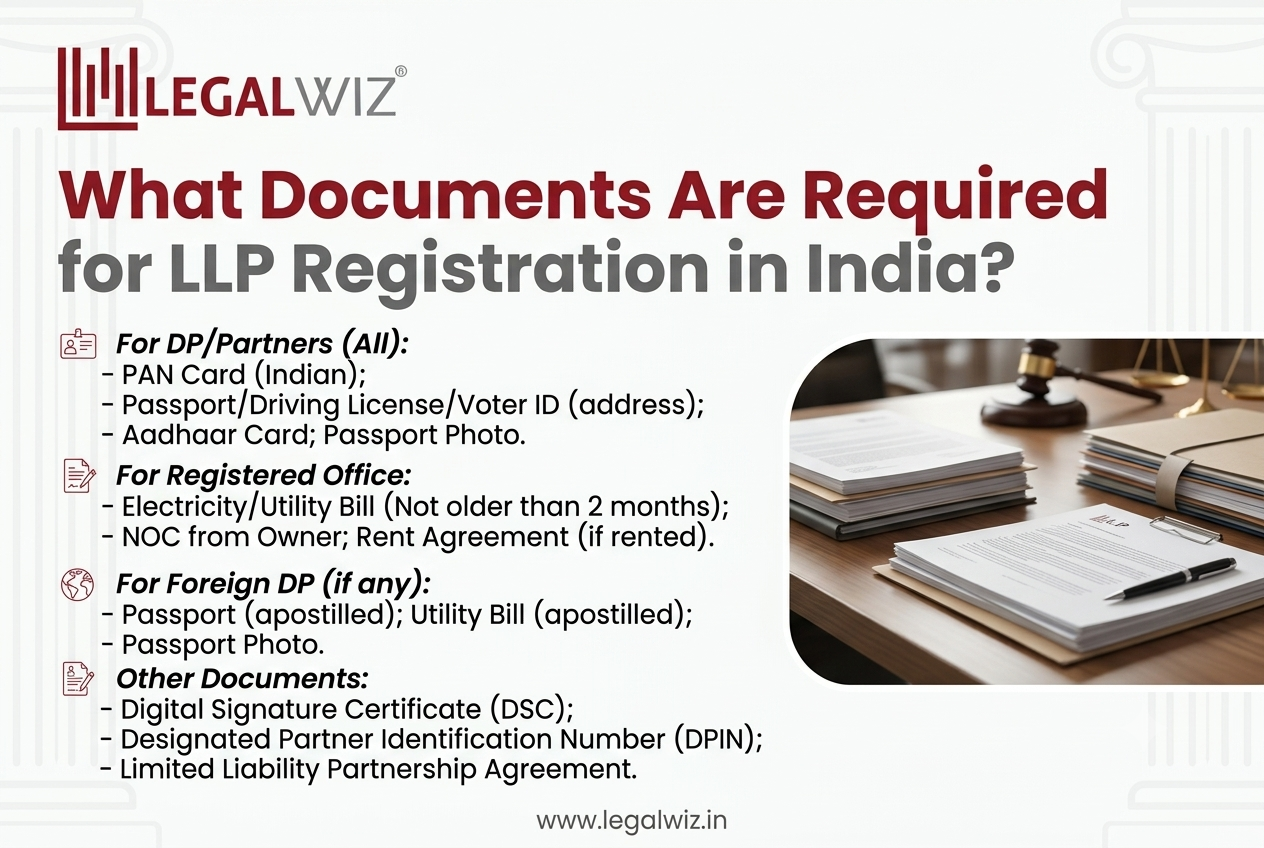
1. Digital Signature Certificate (DSC)
Before submitting any electronic forms on the MCA portal, all proposed designated partners must obtain a Class 3 Digital Signature Certificate. This certificate is used to digitally sign the online incorporation documents. To get a DSC, you must provide a self-attested PAN card, a government-address proof (like an Aadhaar card or passport), and a passport-sized photograph.
2. Partner KYC and Identity Proofs
Each proposed partner must submit specific Know Your Customer (KYC) documents to verify their identity and residential status:
- PAN Card: Mandatory for all Indian nationals. For foreign nationals, a notarized or apostilled copy of their passport is required.
- Identity Proof: A valid Aadhaar Card, Passport, Voter ID, or Driving License.
- Address Proof: A bank statement, electricity bill, telephone bill, or mobile bill. This document must clearly show the partner’s name and current address, and it must not be older than two months.
- Photographs: Recent passport-sized color photographs against a white background.
3. Registered Office Proof
Every LLP must maintain a physical registered office address in India. You must provide the following documents to verify the premises:
- Utility Bill: A recent electricity bill, water bill, gas bill, or property tax receipt for the office premises (not older than two months).
- Ownership or Tenancy Proof: A copy of the Sale Deed or Property Deed if the property is self-owned. If the property is rented or leased, you must submit the formal Rent Agreement along with a No Objection Certificate (NOC) from the property owner.
4. Specific Incorporation Forms and Declarations
The formal incorporation application is filed via the FiLLiP (Simplified Proforma for Incorporating a Limited Liability Partnership) form. To complete this filing, you will need:
- Subscriber Sheet: A formal document signed by all proposed partners expressing their consent to form the LLP and detailing their initial capital contribution.
- Consent to Act as Designated Partner: Signed declarations from the designated partners stating their willingness to serve in that capacity.
The Role of the LLP Agreement
Once the Certificate of Incorporation is issued, the entity has thirty days to draft and file the formal LLP Agreement (via Form 3). This foundational document outlines the internal operational framework, capital contributions, profit-sharing ratios, management duties, voting procedures, and dispute resolution mechanisms. It must be printed on non-judicial stamp paper of a value appropriate to your specific state and signed by all partners.
Securing the right paperwork is the most vital step to easily finish your Llp Registration In India. By keeping your PAN, address proofs, and office documents organized, you can avoid unnecessary processing delays. Proper preparation safeguards your enterprise against early compliance pitfalls and sets you on a path to sustainable growth.
Conclusion
Embarking on a Limited Liability Partnership Registration India venture provides entrepreneurs with an incredible opportunity to scale operations securely. Ensuring that every KYC document, address proof, and digital signature is up-to-date guarantees a rapid transition from application to official incorporation. Once your business is formally registered and the governing agreement is filed, you are fully cleared to open a business bank account and commence commercial operations.